Kerala’s First Biodegradable Airway Stenting: A New Chapter in Breathing Freely
For two young women struggling to breathe, every day was a quiet battle. Years after recovering from tuberculosis, a hidden consequence had taken hold, narrowing their airways and making even the simplest acts of breathing an effort. That changed at Amrita Hospital, Kochi. In a landmark moment for respiratory care in Kerala, Amrita Hospital has successfully performed the state’s first-ever Biodegradable Airway Stenting procedure, making it not only the first centre in Kerala, but the third in all of India to offer this advanced treatment. What Made This Procedure So Special The procedure treated a condition called post-tuberculosis bronchial stenosis, a narrowing of the airways that can develop long after TB has been treated. Left unaddressed, it causes chronic breathlessness, persistent cough, and a significant drop in quality of life. What sets this treatment apart is the nature of the stents used. Unlike conventional stents that remain in the body permanently, these are biodegradable, meaning they dissolve naturally once the airway has healed, eliminating the need for additional surgeries down the line. It’s a gentler, smarter solution for patients who have already been through so much. The bronchoscopic procedure lasted eight hours and was performed with precision by a dedicated team from Amrita’s Division of Interventional Pulmonology and Complex Airway Disorders. Both patients came out of the procedure breathing normally, a result that would have seemed out of reach just months before. The Team Behind the Milestone The procedure was led by Dr. Tinku Joseph, Head of Interventional Pulmonology at Amrita Hospital, Kochi, alongside Dr. Don Jose and Dr. Sreeraj Nair. Dr. Joseph noted that this achievement was made possible through the seamless coordination of expert hands and cutting-edge technology, a combination Amrita has long been committed to. “Biodegradable airway stenting is highly effective for post-TB airway narrowing, chronic cough, phlegm accumulation, breathlessness, and similar obstructions,” Dr. Joseph shared. “Our goal is always to give patients the most effective, least invasive path back to their normal lives.” What This Means for Patients This milestone opens a door for patients across Kerala and the wider region who are living with airway complications following TB, a disease that remains prevalent in South Asia. With Amrita now offering this procedure, patients no longer need to travel far or go without an option that truly addresses the root of their condition. At Amrita, every breath counts.
Amrita Hospital Hosts International Conference on Pediatric Epilepsy Surgery
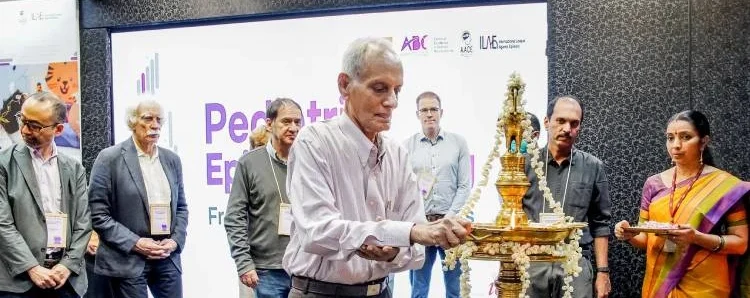
Amrita Hospital has officially inaugurated an international conference and workshop on pediatric epilepsy surgery, bringing together over a hundred doctors, including neurologists and neurosurgeons, from around the world. The event, organized by the Amrita Advanced Center for Epilepsy and the Amrita Brain Center for Children, aims to improve expertise in pediatric epilepsy surgery techniques. The four-day conference was inaugurated by renowned neurosurgeon Dr. P. Sreekumar, who addressed the gathering alongside distinguished speakers Dr. Vinayan K.P., Dr. Ashok Pillai, and Dr. Siby Gopinath. Experts from countries including Germany, Japan, Bulgaria, Brazil, the UK, and Sri Lanka are leading the training sessions. The conference also featured a cultural performance by renowned sarod artist Pandit Abhisek Lahiri, adding a touch of traditional artistry to the scientific discussions. Dr. Vinayan K.P., head of the Pediatric Neurology Department, highlighted that the workshop would cover key topics such as the unique features of epilepsy in children and the challenges associated with pharmacological treatment. Dr. Hans Holthausen, an expert pediatric neurologist from Germany, stressed the importance of early diagnosis and treatment in the management of epilepsy. He pointed out that early intervention can significantly reduce the mental health impact of chronic epilepsy in children. Dr. Holthausen also commended the state-of-the-art facilities at Amrita Hospital, noting that the hospital’s infrastructure for epilepsy treatment is of world-class standards, providing patients with access to cutting-edge medical care. The conference will continue for the next three days, offering participants an in-depth look at the latest advancements in pediatric epilepsy surgery and treatment strategies.
Amrita Hospital Successfully Treated a complex Pediatric Brain Disorder with an associated rare lung complication
Amrita Hospital has achieved a significant medical milestone by successfully managing a rare and complex pediatric neurological condition, underscoring its expertise in advanced multidisciplinary care involving paediatric neurology, neurosurgery, and long-term intensive pulmonology and rehabilitative care. The case involved a rare congenital brain disorder affecting one hemisphere of the brain, associated with severe, drug-resistant epilepsy—a condition seen in only a small number of children worldwide. The child hailing from Kolkata had recurrent seizures starting from the first week of life. To complicate things, the child had a severe chronic respiratory infection leading to significant respiratory difficulties . Early onset of seizures, resistance to conventional medical therapy and severe lung infection posed major clinical challenges, necessitating high-risk, early surgical intervention. The baby had to be airlifted to Amrita while mechanically ventilated for further expert care A multidisciplinary team at Amrita Hospital, including pediatric neurology, neurosurgery and pediatric intensive and pumonology departments , managed the case and decided to proceed with epilepsy surgery to control the seizures. The portion of the malformed brain was disconnected from the rest of the brain through a procedure called hemispherotomy. The young age and associated severe lung I disease made the procedure challenging.. The seizures subsided completely after the procedure. The child had recurrent respiratory infections and needed breathing support through tracheostomy tube ( a tube surgically inserted into the windpipe) and feeding through a gastrostomy tube (a tube surgically inserted into stomach). Ongoing physiotherapy and occupational therapy have contributed to gradual but consistent improvements in motor function, posture, and daily activity. After a long journey of 2.5 years, the anti-seizure medicines were stopped, the tracheostomy and gastrostomy tubes were removed and the family has returned back to Kolkata. Medical experts note that outcomes of this nature are uncommon in such rare neurological conditions and emphasize the importance of early diagnosis, timely surgical decision-making, and sustained rehabilitation. The case stands as an example of how integrated pediatric multidisciplinary care—combining neurology, neurosurgery, critical care, and pulmonology along with proper rehabilitation—can significantly improve quality of life even in highly complex scenarios. Doctors at Amrita Hospital highlighted that the successful management of this rare condition has contributed valuable clinical insight and reinforced the hospital’s role as a tertiary referral centre for advanced pediatric neurological care. The clinical care team was led by Dr. Vinayan KP ( Pediatric neurology ) which included , Dr. Ashok Pillai ( Neuro surgery) , Dr. Sajith Kesavan( ICU and pulmonology), Dr. Vyshakh Anand ( Pediatric neurology ) , and Dr. Ravi Sankaran ( Physical medicine and rehabilitation)